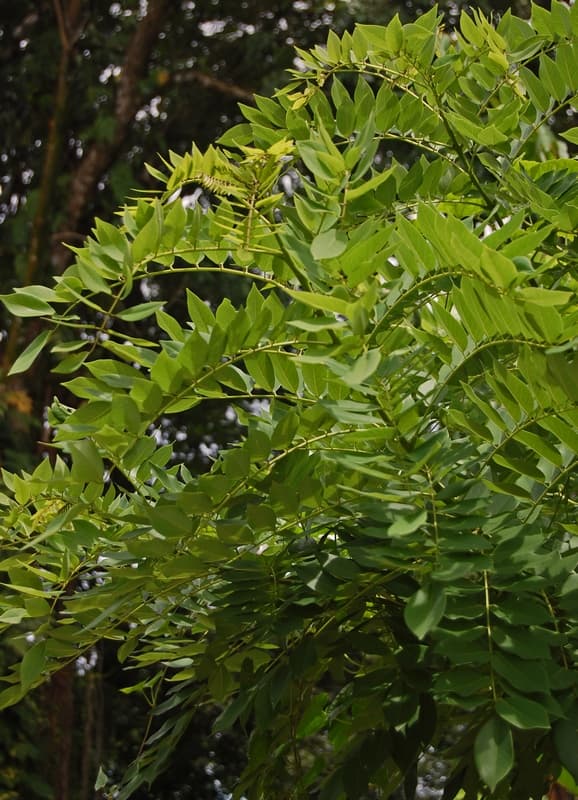
Gamal
Gliricidia sepium
Gamal, often called "mother of cocoa" or "quickstick," is a fast-growing leguminous tree valued for its many uses in agroforestry systems. Native to Central America and widely cultivated across tropical regions, gamal is an excellent nitrogen-fixing tree that improves soil fertility, provides fodder for livestock, and serves as a shade tree and support tree for other more demanding plants
Plant Description
Gamal is a medium-sized deciduous tree that grows 10–12 meters tall. It features compound leaves with bright green leaflets and produces clusters of pink to lavender flowers, which bloom in abundance during the dry season. The tree's lightweight, durable wood is widely used as fuel and in construction, while its ability to fix nitrogen makes it a valuable tool for sustainable land management.
Growing in a Tropical Forest Garden
Gamal is an adaptable and low-maintenance tree that thrives in tropical climates, making it an excellent addition to diverse forest garden systems.
1. Climate and Soil Requirements
- Climate: Gamal thrives in warm tropical climates with temperatures ranging from 22°C to 30°C (72°F to 86°F). It tolerates dry conditions and performs well in areas with seasonal droughts.
- Soil: It grows well in a variety of soils, including poor and degraded soils. Gamal prefers well-drained soils but can tolerate slightly saline conditions and soils with a pH of 4.5–7.5.
2. Planting and Spacing
- Propagation: Commonly propagated by seeds, cuttings, or direct planting of stakes. Seeds germinate quickly, while stakes establish easily in the ground.
- Spacing: Plant trees 3–6 meters apart in agroforestry systems or closer if used as living fences or windbreaks.
3. Care and Maintenance
- Watering: Drought-tolerant once established, but young plants benefit from regular watering during the first year.
- Pruning: Responds well to regular pruning or coppicing, encouraging regrowth and providing material for mulch or fodder.
- Pest and Disease Management: Generally pest-resistant, though occasional issues with aphids or fungal diseases may arise in very humid conditions.
4. Role in Forest Gardens
- Nitrogen Fixation: Gamal enriches the soil by fixing atmospheric nitrogen, making it an ideal companion plant for nutrient-demanding crops.
- Shade Provider: Its spreading canopy offers partial shade, making it suitable as a nurse tree for cacao, coffee, and other shade-loving crops.
- Erosion Control: Gamal's root system stabilizes soil, making it effective for controlling erosion on slopes.
Nutritional and Medicinal Benefits
While not primarily grown for its edible products, gamal offers significant ecological and medicinal benefits.
1. Fodder for Livestock
- The leaves and young shoots are rich in protein and serve as high-quality fodder for livestock like goats, cattle, and sheep.
- Its use as a green manure enriches the soil while providing organic matter to other crops.
2. Medicinal Uses
- Anti-inflammatory Properties: The bark and leaves are traditionally used to treat skin conditions and wounds.
- Insect Repellent: Crushed leaves are known to repel insects and can be used as a natural pesticide.
- Traditional Medicine: Decoctions made from the bark and leaves are used in some cultures to treat fevers, colds, and digestive issues.
Harvesting and Usage
Gamal is highly versatile and can be used throughout the year for multiple purposes.
Uses in Your Forest Garden and Beyond
- Green Manure: Prune branches and leaves to use as mulch, adding nutrients to the soil.
- Fodder: Harvest young leaves and shoots to feed livestock.
- Living Fences: Plant stakes closely to create a living fence or windbreak.
- Fuelwood: Its wood burns efficiently and is commonly used for firewood and charcoal production.
- Bee Forage: The flowers provide nectar for bees, supporting honey production.
Ecological and Functional Benefits
Gamal is highly regarded for its contributions to sustainable agriculture and land restoration:
- Soil Fertility: As a nitrogen-fixing tree, gamal improves soil quality, reduces the need for synthetic fertilizers, and supports intercropping systems.
- Biodiversity Support: Its flowers attract pollinators, and its canopy provides habitat for birds and small mammals.
- Erosion Control: The extensive root system stabilizes soils, particularly on degraded lands or hillsides.
- Carbon Sequestration: Gamal grows rapidly and contributes to carbon storage, mitigating climate change.