Lempeni
Ardisia elliptica
Lempeni (Ardisia elliptica), commonly known as Shoebutton Ardisia, is an evergreen shrub native to Southeast Asia, including the Philippines and Malaysia. It is valued for its dense, glossy foliage and vibrant clusters of red berries that add visual interest to gardens and landscapes. While Ardisia elliptica is mainly grown as an ornamental plant, it also has a place in traditional medicine and plays a role in the ecosystems it inhabits.
Plant Description
Shoebutton Ardisia is a slow-growing, evergreen shrub that typically reaches heights of 1 to 2 meters (3 to 6 feet), although it can sometimes grow taller in favorable conditions. The plant has glossy, dark green leaves that are oval or lance-shaped, creating a lush, dense canopy.
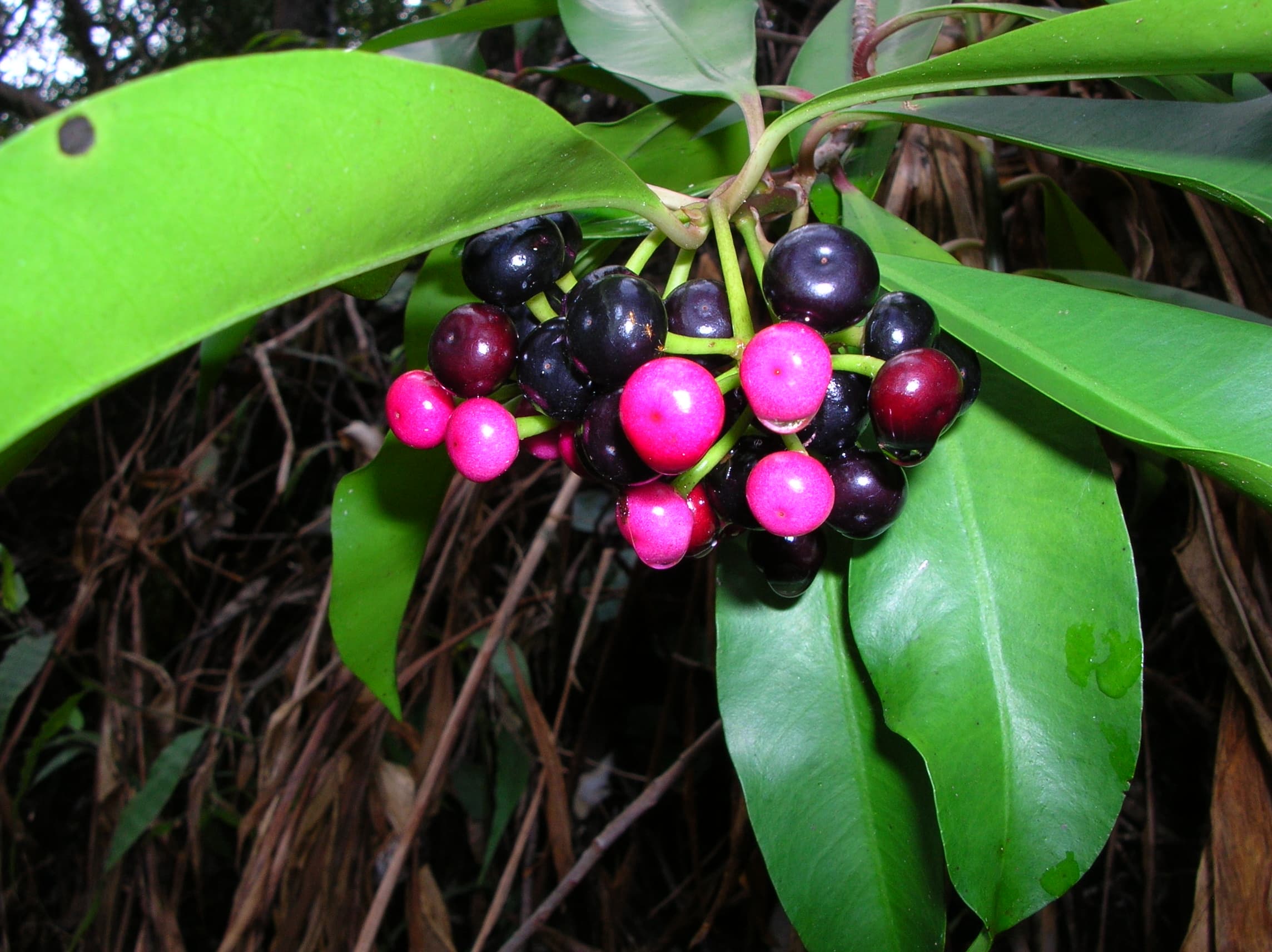
The small, white to pink flowers appear in clusters during the warmer months of the year and are followed by bright red, smooth berries that resemble buttons (hence the name "shoebutton"). The berries grow in dense clusters and can remain on the plant for several months, adding vibrant color to landscapes, especially in the winter months. Despite their ornamental appeal, the berries are toxic if consumed, making the plant unsuitable for areas where pets or young children may have access.
Growing
Shoebutton Ardisia is adaptable to a range of environments but thrives best in tropical and subtropical regions, particularly those with moderate rainfall and shaded areas. It is a relatively low-maintenance plant, making it a good option for landscaping and garden settings.
1. Climate and Soil Requirements
- Climate: Shoebutton Ardisia prefers warm, humid climates and does well in tropical and subtropical regions. It can tolerate light frost but will not survive prolonged freezing temperatures.
- Soil: The plant grows best in well-drained, slightly acidic to neutral soils (pH 5.5–7.0). It is adaptable to a variety of soil types, including clay, loamy, and sandy soils, but it requires good drainage to prevent root rot.
2. Planting and Spacing
- Propagation: Shoebutton Ardisia is commonly propagated through seeds or cuttings. Seeds should be sown in well-draining soil and kept moist until they germinate. Cuttings can be rooted in water or soil with a rooting hormone to encourage faster growth.
- Spacing: The plant should be spaced around 1 meter (3 feet) apart to allow for adequate airflow and prevent overcrowding. It can be planted in clusters to create a dense ground cover or as a specimen shrub in garden beds.
3. Care and Maintenance
- Watering: Shoebutton Ardisia prefers consistently moist soil, particularly during the growing season. While it is somewhat drought-tolerant once established, regular watering during dry spells is recommended for optimal growth.
- Pruning: Pruning is useful for maintaining the shape of the shrub and removing dead or damaged branches. It also encourages bushier growth and helps to manage its spread.
- Fertilizing: Fertilizing the plant with a balanced, slow-release fertilizer or organic compost in the spring helps to promote growth and flowering. The plant benefits from light feeding during the growing season.
4. Pest and Disease Management
Shoebutton Ardisia is relatively pest-resistant but can occasionally be susceptible to aphids, mealybugs, and scale insects. Regular inspection and natural pest control methods can help prevent infestations. Additionally, overwatering or poor drainage can lead to fungal diseases such as root rot, so it's essential to ensure proper soil conditions.
Nutritional and Medicinal Benefits
While Ardisia elliptica (Shoebutton Ardisia) is not commonly used for food, the plant has some traditional medicinal applications. However, it's important to note that its berries are toxic to humans and animals if ingested in large amounts.
1. Medicinal Uses
- Traditional Remedies: In some cultures, parts of the plant, such as the roots and leaves, are used in traditional medicine to treat ailments like fever, headaches, and digestive issues. However, these uses are based on folk medicine, and scientific research on their efficacy is limited.
- Anti-inflammatory: The plant has been noted to possess anti-inflammatory properties in some studies, which could be helpful for treating conditions such as arthritis or muscle pain. However, further research is needed to confirm these effects.
2. Caution
Despite its medicinal uses, Shoebutton Ardisia's berries and other parts of the plant are toxic. Ingesting large quantities of the berries can cause symptoms such as nausea, vomiting, and gastrointestinal distress. It is important to keep this plant out of reach of children and pets.
Ecological and Ornamental Value
Shoebutton Ardisia is primarily grown for its ornamental value in tropical and subtropical gardens. It can serve as a decorative shrub or ground cover in shaded or partially shaded areas.
1. Ecological Role
- Wildlife: While the berries are toxic to humans and pets, they may be consumed by certain bird species in tropical ecosystems. The dense foliage also provides shelter for insects and small animals, contributing to biodiversity in garden spaces.
- Erosion Control: The plant's dense root system can help stabilize soil and reduce erosion, especially in tropical regions prone to heavy rainfall.
2. Ornamental Uses
- Landscaping: Shoebutton Ardisia is a popular choice for landscaping due to its glossy, attractive foliage and striking red berries. It is often used in shaded garden beds, as a hedge, or as a specimen shrub.
- Ground Cover: It can also serve as an effective ground cover plant in tropical gardens, spreading to form a dense mat that suppresses weeds and adds texture to the landscape.