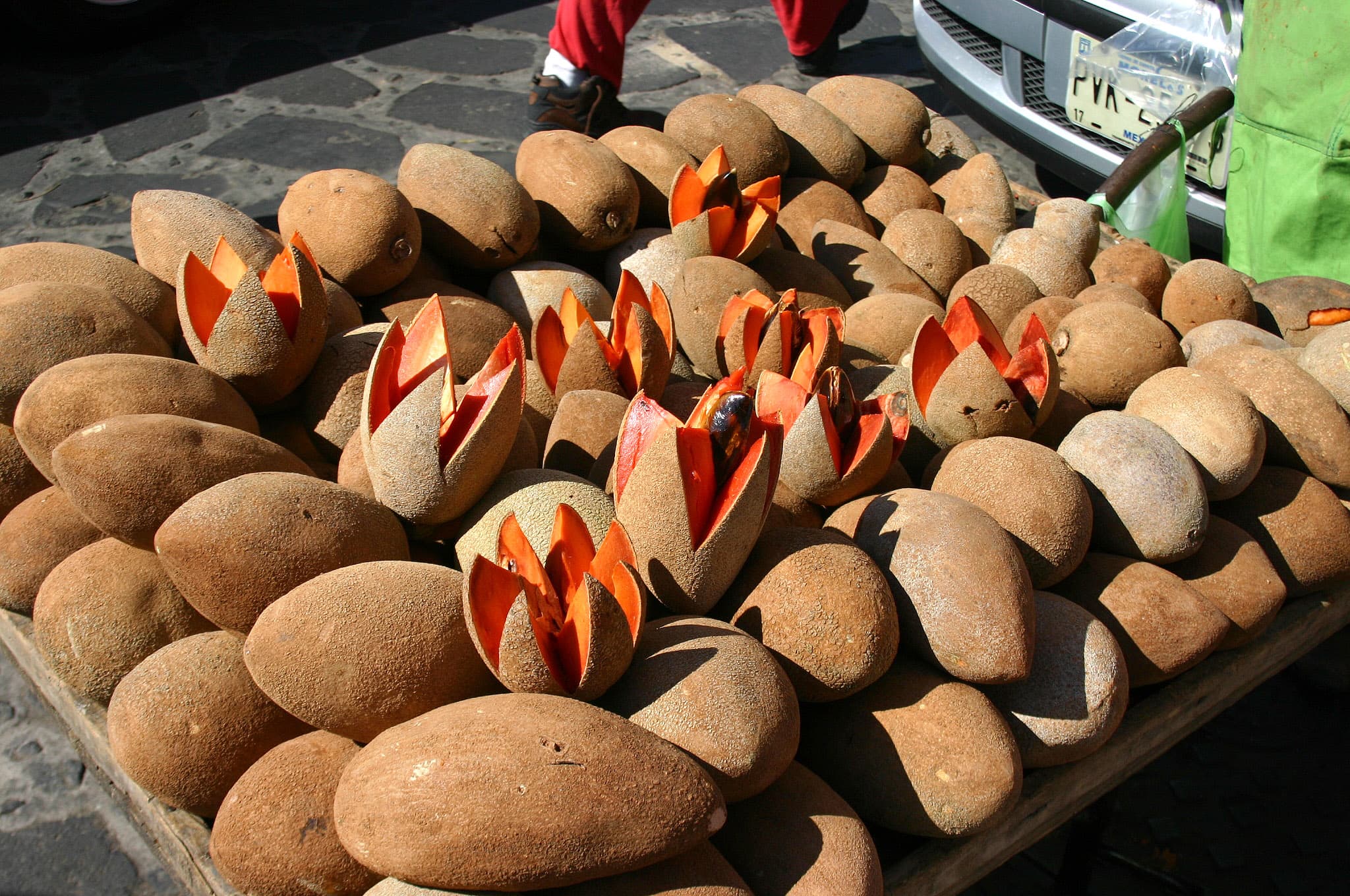
Mamey Sapote
Pouteria sapota
Mamey sapote (Pouteria sapota), also known as zapote, is a tropical evergreen fruit tree prized for its large, sweet, and vibrant orange-fleshed fruits. Native to Central America and Mexico, it has gained popularity across tropical regions worldwide, including Southeast Asia, for its rich flavor, nutritional value, and versatile uses. Its ability to thrive in tropical climates and its role as a productive tree in forest gardens make it an excellent addition to any sustainable landscape.
Plant Description
The mamey sapote tree is a medium to large evergreen tree that can grow up to 15–20 meters tall. It has a dense, rounded canopy with glossy, dark green leaves that give it a lush appearance. The tree produces oval to oblong fruits with rough, brown skin resembling a coconut. Inside, the flesh is vibrant orange to salmon, creamy in texture, and sweet with a flavor often compared to pumpkin pie, apricots, or sweet potato. Each fruit contains a single large, glossy seed.
Growing in a Tropical Forest Garden
The mamey sapote is well-suited to tropical forest gardens, where it can serve as both a fruit-bearing tree and a source of shade for understory plants.
1. Climate and Soil Requirements
- Climate: Thrives in warm, humid tropical climates with consistent temperatures between 24°C and 30°C (75°F to 86°F). It prefers areas with distinct wet and dry seasons but requires protection from frost.
- Soil: Prefers deep, well-draining soils rich in organic matter. A slightly acidic to neutral pH (6.0–7.5) is ideal.
2. Planting and Spacing
- Propagation: Typically propagated through grafting to ensure early fruiting and desirable traits. Seed-grown trees are viable but take longer to bear fruit (7–10 years).
- Spacing: Trees should be spaced 8–10 meters apart to accommodate their large canopy and extensive root system.
3. Care and Maintenance
- Watering: Young trees require regular watering, especially during dry spells. Mature trees are drought-tolerant but benefit from supplemental irrigation during prolonged droughts.
- Pruning: Regular pruning maintains tree shape, improves air circulation, and encourages fruit production.
- Feeding: Apply compost or a balanced organic fertilizer twice a year to support growth and fruiting.
4. Role in Forest Gardens
- Canopy Tree: Serves as a canopy layer, providing shade for smaller plants and creating a favorable microclimate.
- Diversity and Resilience: Its deep root system and drought tolerance make it a reliable food source in challenging conditions.
Nutritional and Medicinal Benefits
The mamey sapote fruit is not only delicious but also packed with nutrients and potential health benefits.
1. Nutritional Benefits
- Rich in Carbohydrates: Provides a natural energy boost with its high sugar content.
- Vitamin A: Supports vision, skin health, and immune function.
- Vitamin C: Enhances immunity and aids in collagen production.
- Potassium: Helps regulate blood pressure and support muscle function.
- Dietary Fiber: Promotes digestive health and prevents constipation.
2. Medicinal Uses
- Antioxidant Properties: The fruit contains carotenoids and other antioxidants that help fight oxidative stress.
- Digestive Aid: Traditionally used to soothe digestive issues.
- Skin and Hair Care: The seed oil is used in cosmetics for its moisturizing properties.
Harvesting and Usage
Mamey sapote trees begin to bear fruit 3–5 years after grafting. The fruits are ready for harvest when their skin turns slightly darker and rougher, and they yield slightly to pressure.
Uses in Your Forest Garden and Kitchen
- Fresh Eating: The creamy, sweet flesh is enjoyed fresh as a dessert fruit.
- Smoothies and Ice Cream: Adds a rich, creamy texture and natural sweetness to drinks and frozen treats.
- Baking and Cooking: Used in pies, cakes, and other baked goods.
- Preserves: Made into jams and sauces.
- Traditional Medicine: The seed kernel and leaves have been used in folk medicine for various purposes.
Ecological and Functional Benefits
Beyond its culinary value, mamey sapote offers several ecological benefits:
- Pollinator Support: The tree’s flowers attract bees and other pollinators, enhancing biodiversity in the garden.
- Soil Enrichment: Fallen leaves decompose into rich organic matter, improving soil health.
- Shade Provider: Its dense canopy offers shade, reducing evaporation and creating a suitable environment for understory plants.
- Windbreak: Its sturdy structure makes it an effective windbreak in agroforestry systems.