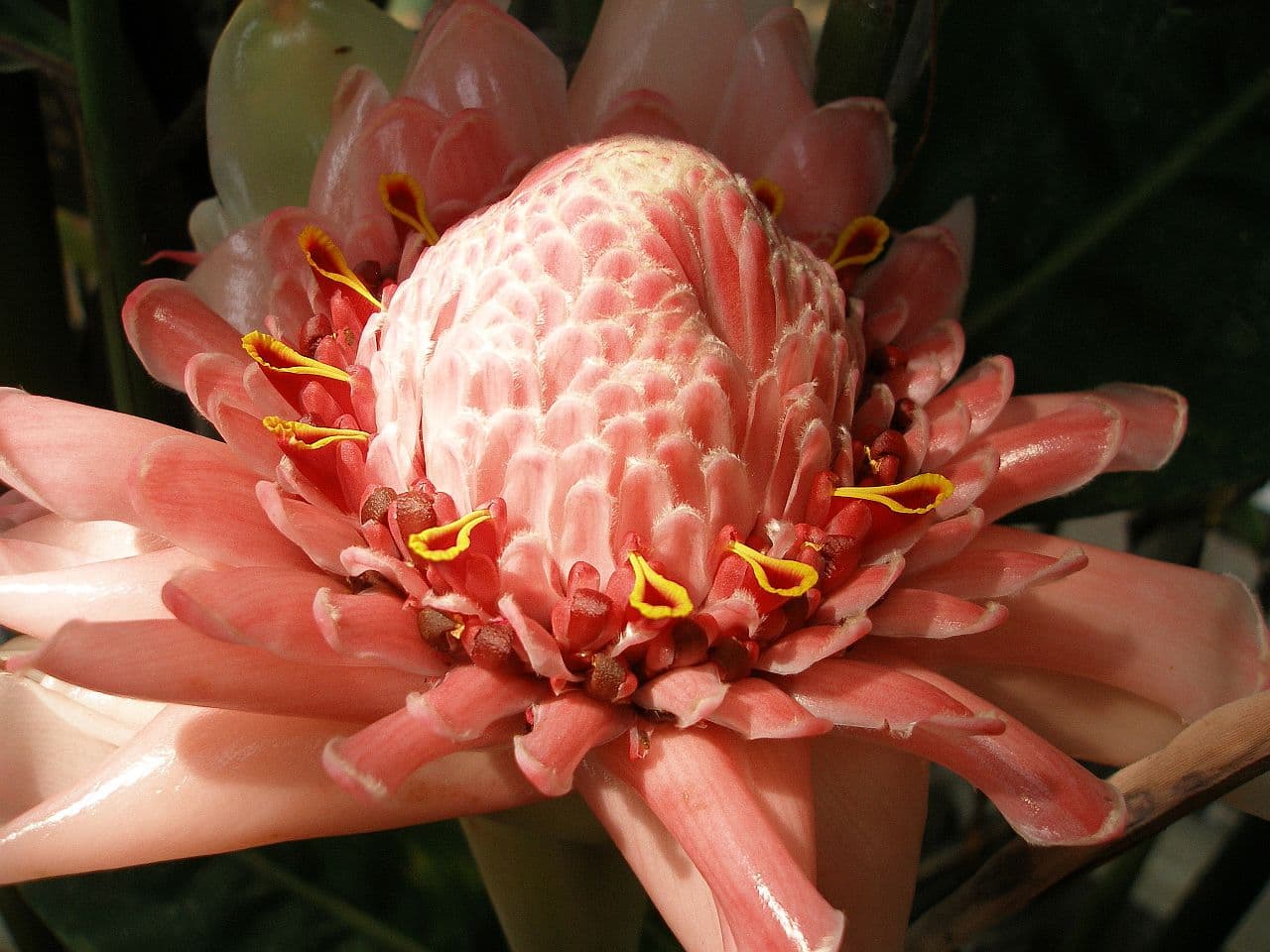
Torch Ginger
Etlingera elatior
The Torch Ginger (Etlingera elatior), also known as Ginger Flower, Red Ginger Lily, or Porcelain Rose, is a strikingly beautiful and versatile tropical plant native to Southeast Asia. Revered for its ornamental appeal, culinary uses, and traditional medicinal benefits, this plant is a staple in tropical gardens and cultural traditions.
Plant Characteristics
- Height: Torch Ginger can grow up to 3–6 meters (10–20 feet), making it an impressive addition to any landscape.
- Canopy Width: It has a spread of 1–2 meters (3–6 feet) with upright stalks and large, glossy leaves.
- Flowers: The plant produces spectacular cone-shaped flower heads in shades of red, pink, or white. These flowers emerge from the base of the plant, growing on thick stems, and are often compared to torches for their fiery, elegant appearance.
- Leaves: The lance-shaped leaves are deep green and add a lush, tropical aesthetic.
Growing
Torch Ginger thrives in warm, humid environments, making it ideal for tropical and subtropical regions. Here’s how to cultivate it successfully:
1. Climate
- Prefers tropical climates with temperatures ranging from 20–30°C (68–86°F).
- Requires high humidity and thrives in areas with consistent rainfall.
2. Soil
- Grows best in well-drained, rich, loamy soil with plenty of organic matter.
- A slightly acidic to neutral pH (6.0–7.0) is ideal.
3. Sunlight
- Thrives in partial to full sunlight, though it prefers some shade during the hottest part of the day.
4. Watering
- Requires consistent moisture, especially during dry periods.
- Mulching around the base helps retain soil moisture and regulate temperature.
5. Propagation
- Can be propagated through rhizome division or from seeds, although rhizome division is faster and more reliable.
6. Maintenance
- Low-maintenance once established.
- Remove dead stalks and leaves to encourage new growth.
Culinary and Cultural Uses
1. Culinary Uses
Torch Ginger flowers and buds are widely used in Southeast Asian cuisine:
- Buds: Used as a flavorful ingredient in dishes like Malaysian laksa, Thai curries, and Indonesian sambals.
- Flavor: The buds have a tangy, slightly spicy, and floral flavor that enhances soups, salads, and stews.
- Stalks: Occasionally used to flavor broths and marinades.
2. Cultural Significance
- In Indonesia and Malaysia, the Torch Ginger flower is a symbol of beauty and is often used in ceremonies and as decorative elements.
Medicinal and Nutritional Benefits
Traditional medicine recognizes Torch Ginger for its potential health benefits:
- Antioxidant Properties: Rich in bioactive compounds that fight oxidative stress.
- Digestive Aid: Extracts of the plant are believed to improve digestion and relieve bloating.
- Anti-inflammatory: Used in traditional remedies to alleviate inflammation and joint pain.
- Immune Support: The plant’s phytochemicals are thought to boost the immune system.
Torch Ginger is also being studied for its potential in modern medicine, particularly for its antimicrobial and anticancer properties.
Ornamental Appeal
Torch Ginger is highly valued as an ornamental plant for tropical gardens:
- Its bold, architectural flowers make it a show-stopping centerpiece in landscapes.
- Cut flowers are long-lasting and widely used in floral arrangements.
Ecological Role
In a tropical forest garden, Torch Ginger plays several important roles:
- Pollinator Attraction: The bright flowers attract bees, butterflies, and birds, enhancing biodiversity.
- Erosion Control: Its extensive root system stabilizes soil on slopes or in wet areas.
- Understory Plant: Thrives under the canopy of larger trees, making it an excellent choice for layered planting systems.